Posted on 20.12.2016. Updated on 20.10.2026.
On cold winter days, we tend to reach for a thick winter coat to protect us from the cold, wind and/or rain. The thicker, the better. Or so we think…
Mountaineers, professional walkers and winter sports enthusiasts have known for a long time that a well-built layering system is far more efficient and more comfortable than one thick winter coat. Depending on the weather and how hard you are working, you add or remove layers. The same is true if you work outdoors or in a cold store.
How does it work?
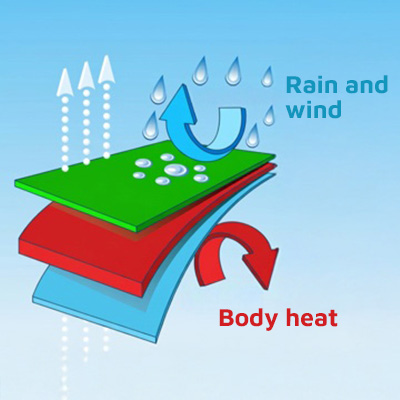
Your own body heat is trapped between the layers, which act as insulation. Removing a layer lets the warm air between them escape, so you cool down automatically. Used correctly, the 3-layer system lets you work comfortably in low temperatures and with varying levels of effort.
Moisture is the big enemy here. As soon as your clothing gets wet, from rain or from your own sweat, you lose heat much faster. Water draws heat away up to 25 times faster than dry air, so wet clothing or wet skin makes you cool down far more quickly. Each of the three layers therefore plays a part in managing that moisture.
| Layer | Function | Suitable materials |
|---|---|---|
| 1. Base layer | Wicks away sweat and keeps the skin dry | Merino wool or synthetic fibres (polyester, polypropylene, Viloft®) |
| 2. Mid layer | Insulates and retains body heat | Fleece or softshell |
| 3. Outer layer | Keeps out wind, rain and snow | Waterproof, windproof and breathable rain jacket compliant with EN 343 / EN ISO 24232:2025 |
What are the 3 layers and how do you combine them?
1. Base layer
You wear this layer right against the skin. It has two important functions: regulating your body temperature and wicking moisture away from the body to the next layer. This matters because moisture draws heat away and a wet base layer cools you down when you don’t want it to. Look for terms such as “moisture-wicking” or “quick-drying”.
The most commonly used fabrics are wool or synthetic fibres:
- Merino wool is a natural fibre that retains warmth even when it gets damp. It is breathable, regulates your body temperature, feels soft and is naturally antibacterial, so it stays fresh for longer.
- Synthetic fibres such as polyester, Viloft® or polypropylene are a budget-friendly alternative.
Cotton is not suitable as a base layer: it does not pass moisture on but holds on to it. Your body then cools down faster instead of staying warm.
2. Mid layer
The main job of the second layer is insulation. It captures valuable energy and heat and stops cold air from reaching your body. A good mid layer is breathable and passes excess moisture on to the outer layer. There are two common choices:
- Fleece: soft, light and good at retaining body heat. Excellent breathability, but less resistant to wind and rain. A windproof fleece therefore has an extra layer that blocks the wind.
- Softshell: combines warmth with a sturdy outer layer that is windproof and often water-repellent too. Ideal if you are active and want protection against changeable weather.
3. Outer layer
This layer is your shield against wind, rain, snow and hail. It must be waterproof, windproof and breathable so that perspiration is not trapped. Under the EN 343 / EN ISO 24232:2025 standard, rainwear is tested on exactly these three properties. A rain jacket with a breathable membrane such as GORE-TEX® or Sympatex® is the best choice. A coated jacket is a more budget-friendly alternative: it is waterproof but not breathable, so you get hot and clammy more quickly when you exert yourself.
Tips for combining layers well
- Don’t overdress. Too many layers make you sweat, and wet clothing cools quickly. It is better to start slightly too light and add or remove layers as you move or as the temperature changes.
- Adjust your layers to your activity. For heavy physical work a lighter mid layer is enough; for static work, such as in a cold store or freezer, you need more insulation.
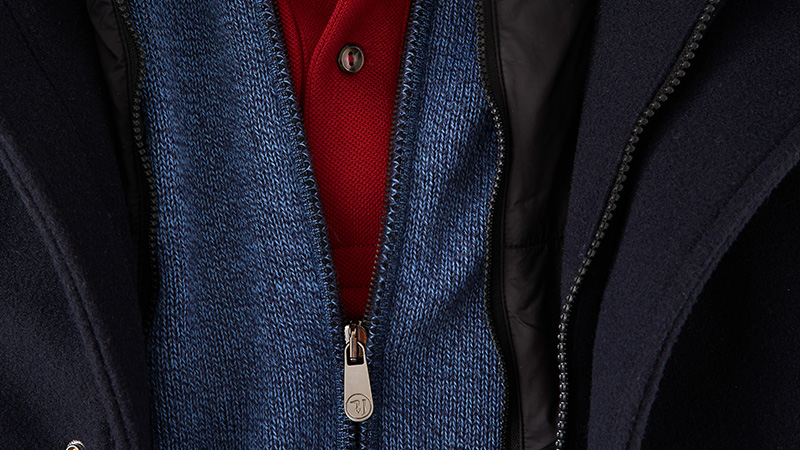
- Combine the outer and mid layer in one product. Many manufacturers offer jackets with zip-out sleeves or linings, so you can switch quickly between layers. There are also thick jackets that insulate so well that they take over the role of the mid layer. That works in stable conditions, but you have less flexibility when your effort or the temperature varies. If you choose three separate layers, the outer layer can be thinner.
- Mind the standard for extreme cold. For insulating clothing in moderate cold (down to around -5°C) there is EN 14058; for severe frost or freezers (colder than -5°C) there is EN 342. The latter does not replace your rain jacket: EN 343 / EN ISO 24232:2025 covers rain and wind, while EN 342 covers insulation in extreme cold. Some jackets combine both, so check the label.
- Combine with other requirements. If you work in the dark or near the road, choose clothing with reflective bands compliant with EN ISO 20471. Do you wear a safety helmet? Make sure your layers don’t get in its way.
- Don’t forget your head, hands and feet. The layering system protects your torso. For your extremities, which cool down fastest, read Working outdoors in the cold? The following types of PPE will protect you from head to toe.
Frequently asked questions about the 3-layer system
What is the 3-layer system?
The 3-layer system is a way of dressing with three functional layers: a base layer that wicks away sweat, a mid layer that insulates and an outer layer that protects against wind, rain and snow. You add or remove layers depending on the conditions.
Which material is best for the base layer?
Merino wool is the best: it retains warmth even when damp, is breathable and is naturally antibacterial. Synthetic fibres such as polyester or polypropylene are a budget-friendly alternative.
Why not cotton as a base layer?
Cotton holds on to moisture instead of passing it on. Your clothing stays wet against your skin and your body cools down faster.
Which standard applies to rainwear?
EN 343 / EN ISO 24232:2025. This standard tests whether clothing is waterproof, windproof and breathable. Also read: From EN 343 to EN ISO 24232:2025 – what will change for your rainwear?
Not sure which combination suits your working environment? Our Safety Experts will be happy to help.