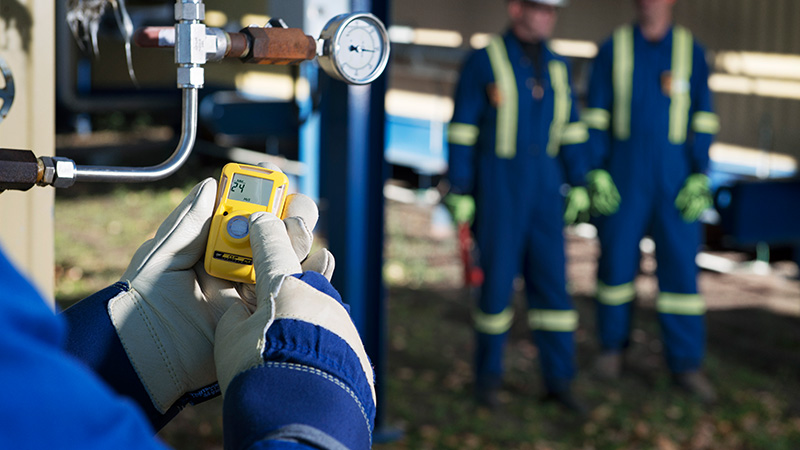
You are exposed to various safety hazards on a daily basis in an industrial setting. People who may come into contact with dangerous gases are particularly at risk. Portable gas detectors therefore play a crucial role in protecting employees from hazards such as poisoning, oxygen deprivation and explosions.
In this article, we go through what to look out for when selecting gas detection, what type of sensor you need and how to deploy it.
The importance of gas detection
Many dangerous gases are odourless and invisible, making a leak or accumulation impossible to spot without tools. Before entering a confined space, the ambient air should therefore always be checked with a gas detector. While work is going on, the detector will continuously monitor the air and provide timely warnings of risks.
Shut-downs and maintenance (shut-downs/turnarounds) also increase the risk of leaks and toxic gas releases. Gas detection systems ensure that these hazards are quickly spotted, allowing employees to intervene or evacuate immediately.
Step 1: What type of gas should be detected/which hazard do you want to measure?
It is important to know exactly what you need to measure because not all gases are the same. Methane and propane are flammable gases, while carbon monoxide or hydrogen sulphide are toxic, so they are not detected in the same way. It is important to first determine which gases may be present.
There are three types of hazard, each with a specific detection method (measurement method):
- Oxygen deprivation (suffocation)
- Toxic gases (health risks)
- Explosion hazard (flammable gases)
Step 2: Single or multi-gas detector?
To detect gas, you have the choice of a single-gas detector or a multi-gas detector.
- Only oxygen deficiency or a maximum of one hazardous gas (e.g. CO or H₂S)? à Single gas detector
- Multiple hazardous gases (oxygen deficiency, toxic gas, explosion hazard)? à Multi-gas detector
Step 3: Which type of sensor for which gas?
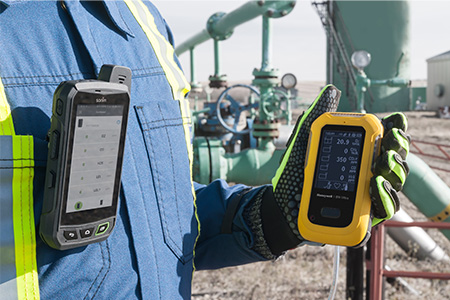
There are different sensor technologies for detecting different gases. Below, we list the most common types of gas and the sensors needed to detect them.
| Gas (group) | Hazard | Sensor | Points of attention |
|---|---|---|---|
| Combustible gases: methane (CH₄), propane (C₃H₈), butane (C₄H₁₀) and hydrogen (H₂) | Explosion risk | LEL-sensor (catalytic or infrared) | Catalytic = oxygen-dependent. Infrared also works in inert environments, but does not measure H₂/acetylene. |
| Toxic gases: Carbon monoxide (CO), hydrogen sulphide (H₂S), ammonia (NH₃), sulphur dioxide (SO₂) and chlorine (Cl₂) | Health | Specific sensors (e.g. CO sensor, H₂S sensor) | Each sensor measures only one gas → choose exactly what you need. |
| Oxygen (O₂) | Choking hazard | O₂-sensor | Warning when O₂ level is too low or too high. |
|
Carbon dioxide (CO₂) |
Health/environment | CO₂-sensor | Applied in greenhouses, breweries, storage. |
| Volatile organic compounds (VOCs): Benzene, toluene and formaldehyde | Health/explosion hazard | PID-sensor | Wide range, high sensitivity, but not selective. |
LEL sensors: common choices and pitfalls
Lower Explosive Limit (LEL) sensors are used to detect flammable gases. There are different types, each with advantages and disadvantages.
Choice of LEL sensors:
| LEL sensor type | Advantages | Disadvantages | Notes |
|---|---|---|---|
|
Filtered catalytic LEL sensor |
Resistant to sensor toxins, suitable for "hot works" such as welding where acetylene may be present | Oxygen-dependent - does not work for oxygen deprivation | Often used incorrectly in oxygen-deficient spaces |
|
Unfiltered catalytic LEL sensor |
Detects almost all combustible gases, including heavier hydrocarbons (C1-C9), fast response, suitable for "hot works" with acetylene | Oxygen-dependent, less resistant to sensor toxins | Sensor toxins such as silicone can block sensor |
|
Infrared (IR) LEL sensor |
Very long lifetime (5-10 years), works also in inert environment, good resistance to sensor toxins, low battery consumption | Cannot detect hydrogen or acetylene | Sometimes misused with hydrogen or acetylene |
Tip: Always choose the type of sensor based on the specific application, the gas that may be present and the environment (oxygen level, sensor toxins).
What are VOCs and why are they important?
VOCs (Volatile Organic Compounds) are volatile organic compounds that evaporate easily at room temperature. They are in solvents, paints, fuels, adhesives and numerous industrial processes.
Measuring VOCs is crucial because they:
- May be toxic or even carcinogenic;
- Cause air pollution and are an explosion hazard;
- Fall under strict legislation, such as OSHA and EU directives.
Where is VOC detection crucial?
VOC measurements are important in various industries and applications, for example:
- Paint spray booths and chemical production;
- Storage tanks, oil and gas industry;
- Pharmaceutical manufacturing and waste treatment;
- Indoor air monitoring in buildings and cleanrooms.
How does a PID sensor work?
A PID (Photoionisation Detector) detects VOCs by using UV light to ionise gas molecules. The released charges are measured and converted into a concentration. For example, a PID sensor can quickly and accurately trigger an alarm as low as 0.1 ppm.
| Advantages | Restrictions |
|---|---|
|
|
Tips on choosing the right PID sensor
- Choose a measurement range suitable for your application (e.g. 0-2000 ppm for industrial monitoring)
- Note the UV lamp: standard 10.6 eV or 11.7 eV for wider detection
- Check serviceability and possible interferences
Alarm values on gas detection: TWA & STEL
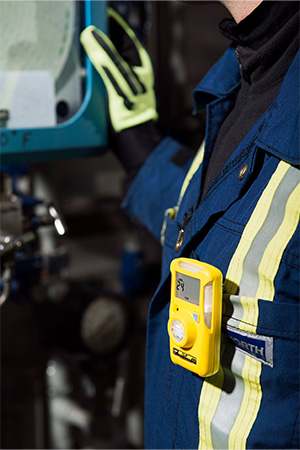
For VOCs and other gases, it is important to monitor both TWA and STEL :
- TWA (Time Weighted Average): average exposure over a working day (8 hours). Protects against chronic effects, such as damage from long-term exposure.
- STEL (Short Term Exposure Limit): maximum exposure in a short period of time (15 minutes). Prevents acute effects such as headache, irritation or loss of consciousness.
For example: An STEL alarm in a paint spray booth requires immediate action, even if the TWA is still within the standard. Modern gas detectors calculate TWA continuously and immediately raise an alarm if the STEL value is exceeded. Thus, they offer double protection: against gradual health risks as well as acute hazards.
Step 4: Where and when do you use gas detection?
Gas detection systems/devices are used in a variety of situations, including:
- Industry & chemical plants: detection of flammable, toxic or explosive gases in refineries, chemical plants and storage facilities
- Construction & underground areas: sewers, tanks, tunnels or basements where oxygen deficiency or toxic gases may occur
- Energy production & drilling rigs: monitoring of flammable gases and vapours during production and maintenance
- Laboratories & cleanrooms: detection of toxic or volatile organic compounds (VOCs) such as benzene, toluene or formaldehyde
- Residential & commercial construction: control of CO, CO₂ or other harmful gases at central heating plants, kitchens or storage areas
- Maintenance & shut-downs: during shut-downs or turnarounds, pipes and installations are inspected and the risk of accidental leaks increases
Calibration and maintenance of gas detection equipment/devices
To ensure the correct operation of your gas detector, it is necessary to calibrate and maintain it every 6 months if required. Certain types of sensors have a limited lifespan and need to be replaced regularly. You should also check and replace the sensor filters regularly.
Vandeputte also provides maintenance and calibration of your portable gas detectors, if required. You can get in touch with your contact person for this or visit info@vdp.com
Before each use, you should do a bump test. This is a quick functional test with a reference gas that checks that the sensors respond correctly. Did your bump test fail? Then your device needs to be calibrated.
Discover our test gases for gas detectors
Our gas detectors
To protect you and your employees, we have several portable gas detectors, both single and multi-gas detectors.
Discover the benefits of gas detectors:
- Devices are equipped with bluetooth and can be connected with a free app
- Adjustable alarm values for different working conditions
- ATEX certified for hazardous areas
- In case of alarm, this is both audible and visible, and also tangible on some models through a vibration function
Discover all our gas detectors
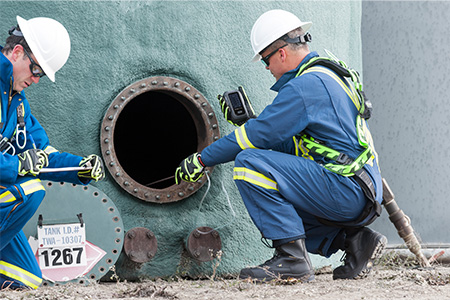
Choosing the right gas detection solution is crucial for the safety of your employees. Contact us for personal advice and find out which gas detectors best suit your specific needs.