Heat is the greatest climate risk in the workplace, and it is getting worse. 95% of all climate-related deaths in Europe are associated with heat waves — not floods, not storms, but heat. Employees performing physically demanding work in hot conditions are among the most vulnerable groups. Yet heat stress in the workplace remains underestimated in many companies.
60% of Europe experienced in 2024 more days than average with at least strong heat stress.
ESOTC 2024, Copernicus/WMO via meteo.be
The trend is clear: summers are getting hotter, heat waves more frequent and workplace risks greater. As an employer, you are legally required to manage thermal risks.
In this article we explain what heat stress is, how to recognise it, what the legislation requires and which PPE solutions truly work.
Sources: Copernicus/WMO – European State of the Climate 2024 via meteo.be | VMM – Heat victims indicator via vmm.vlaanderen.be | EEA – Heat and Health via climate-adapt.eea.europa.eu
In this article
- What is heat stress and when does it occur?
- Consequences and impact in the workplace
- Legislation: Belgium & the Netherlands
- Organisational and technical measures
- PPE solutions
1. What is heat stress and when does it occur?
Heat stress is the physical strain that occurs when the body can no longer adequately dissipate its excess heat. The core temperature rises, sometimes to dangerous levels. From a body temperature of 38°C, the first symptoms appear: fatigue, dizziness and loss of concentration. If the temperature rises above 40°C, we are dealing with a life-threatening medical emergency.
Causes: more than just the sun
The most obvious causes are environmental factors:
- High outdoor temperatures
- Direct sun exposure
- High humidity
- Poor ventilation
But heat stress is rarely the result of a single factor. Personal characteristics such as age, physical condition, medication use and hydration status play an equally important role.
In the workplace, occupational factors are added: physically demanding work, high work pressure and long working hours significantly increase the body's heat production. The choice of PPE is also decisive. Thick or poorly breathable clothing, multiple layers of clothing and airtight protective suits hinder heat dissipation and accelerate overheating.
Important: heat stress is not a seasonal problem. In many sectors, employees work year-round in warm indoor environments, for example near blast furnaces, ovens, melting installations or other industrial heat sources.
2. Consequences of heat stress and impact on the workplace
High temperatures are more than a matter of comfort. Anyone working in hot conditions – on a construction site, in a warehouse, a factory or outdoors in the field – is exposed to risks that systematically undermine the body.
Physiological consequences
The human body is designed to keep the core temperature stable around 37°C. It uses two mechanisms for this:
- Thermogenesis: This is the process by which your body produces heat to maintain its temperature. This happens automatically through your metabolism (your body functions and uses energy) and through muscle activity (e.g. exercise).
- Thermolysis: This is the process by which your body dissipates excess heat to prevent overheating. This occurs through the release of heat into the environment, contact with cooler surfaces and, of course, sweating, whereby evaporation provides cooling.
At ambient temperatures above 35°C, evaporation through sweat is the only effective mechanism for dissipating heat, but in humid environments this works much less well.
When the body sweats heavily to cool itself, it loses significant amounts of fluid and electrolytes – leading to headaches, nausea, muscle cramps and measurable cognitive decline.
The heart works harder (increased heart rate) to dissipate heat and improve blood circulation, which can become directly dangerous for employees with cardiovascular disease.
Skin irritation and heat rash are further signs that the body is reaching its limits.
From discomfort to medical emergency
Heat stress has a clear progression in which each phase requires a different response.
Heat cramps are the first warning signal: painful muscle cramps due to salt and fluid loss.
Heat exhaustion is more serious. The employee shows weakness, dizziness, a rapid heart rate, nausea and cold, clammy skin. This is the moment to intervene immediately: cool down, hydrate, rest.
Heat stroke is an absolute medical emergency. Body temperature rises above 40°C. Without immediate intervention, this can be life-threatening.
Cognitive decline: the hidden risk
What receives too little attention in safety analyses are the cognitive effects of heat. And it is precisely these effects that make heat stress so dangerous in the workplace. At high temperatures, concentration falls, reaction times slow and decision-making deteriorates. Employees make more errors at the very moments they are working with machines, vehicles or hazardous substances. The risk of occupational accidents increases significantly, while the cause remains invisible at first glance.
Chronic exposure: the creeping danger
A single exposure to heat is taxing. Prolonged or repeated exposure is outright harmful. The body gradually loses its ability to efficiently regulate its core temperature: sweat production becomes less effective, blood circulation to the skin is disrupted. The heart and kidneys are systematically placed under greater strain, increasing the risk of cardiovascular disease and kidney problems. Chronic fatigue and a structurally lower work capacity are the result.
The economic impact for employers
Heat stress is a business risk with direct consequences. Reduced alertness leads to more occupational accidents. Physical and mental exhaustion depresses productivity. Absenteeism rises. And the costs of errors, downtime and medical interventions quickly mount up.
3. Legislation on heat and thermal stress
| Belgium: Codex on Well-being at Work Book V, Title 1: Thermal Environmental Factors |
Netherlands: Working Conditions Decree, Article 6.1 Physical factors in the workplace |
|---|---|
Source: FPS Employment |
Source: Arbopo |
! Belgian legislation is particularly clear: the risk analysis is not a snapshot. The combination and change of factors throughout the working day determines the risk. Only measuring at the hottest moment is not sufficient.
4. Organisational and Technical Measures
No PPE replaces a well-organised working environment. The first line of defence against heat stress is organisational and technical.
Organisational measures
- Extra and longer breaks during heat waves*, with sufficient time to cool down
- Adjusted working hours: planning heavy work early in the morning or late in the afternoon
- Rotation systems so that employees do not work continuously in the heat
- Sufficient drinking water available at easily accessible locations (legally required)
- Gradual build-up of workload for new employees and returning colleagues
*A heatwave is defined in both Belgium and the Netherlands as at least five consecutive days with temperatures of 25°C or higher, including at least three days reaching 30°C or more. In Belgium this is measured in Uccle; in the Netherlands in De Bilt.
Technical measures
- Good ventilation and air circulation in the workplace
- Shade solutions for outdoor work
- Cooling of work spaces where this is possible and feasible
- Heat shields or insulation at heat-radiating installations
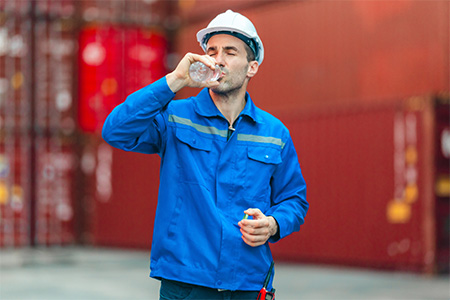
5. PPE solutions for working with heat stress
In addition to technical and organisational measures, appropriate personal protective equipment (PPE) can play a key role in preventing heat stress. The following is a comprehensive guide to selecting PPE when working with heat stress.
5.1 BREATHABLE AND PROTECTIVE WORKWEAR
Clothing is often the first source of additional heat stress, especially when protective functions conflict with ventilation. The choice of material is decisive.
Where possible, given the risks, opt for clothing that is breathable and allows heat to escape.
| PPE type | WHY SUITABLE IN HEAT | Benefits |
|---|---|---|
| Polyester | Wicks sweat quickly and speeds up evaporation | Light, comfortable, quick‑drying, durable |
| (Merino) wool | Regulates temperature and keeps skin dry | Cool in summer, warm in winter, prevents irritation |
| Mesh clothing | Maximum ventilation | Free airflow, fast heat and moisture dissipation |
| Coolsuits | For non‑breathable coveralls | Breathable back panel, reduced heat stress |
| UV workwear | For outdoor workers | UPF 40–50+, protection against sunburn and skin issues |
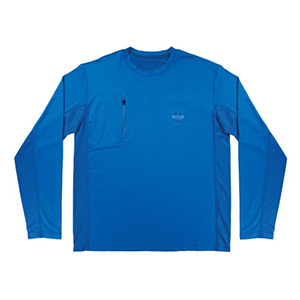
Discover all our clothing against heat stress
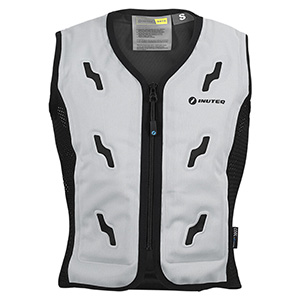
5.2 COOLING VESTS
Cooling vests are one of the most effective PPE for serious heat stress. Depending on the working environment and risk level, a different technology should be chosen. How do you choose the best cooling vest for your situation?
| Type of cooling vest | How it works | Ideaal for | Examples |
|---|---|---|---|
| Evaporative cooling | Water evaporates and provides natural cooling | Suitable for outdoor work, prolonged exertion | Bodycool Smart‑X, Bodycool 2BSafe |
| PCM cooling vests | Maintains constant temperature (e.g. 21°C) | In extreme heat, to be used as an extra layer under chemical suits | Bodycool Pro, PCM CoolOver 21°C |
| Active air cooling | Ventilation enhances heat dissipation | Directly deployable as they do not need to be placed in a cooler | Bodycool AirVent |
5.3 VENTILATED HELMETS & COOLING ACCESSORIES
The head is particularly sensitive to overheating. A ventilated helmet improves air circulation, reduces heat stress and increases wearing comfort. Supplementary accessories such as sweatbands and cooling neck flaps remove heat and moisture, increase comfort and reduce the risk of headaches, dizziness and overheating.
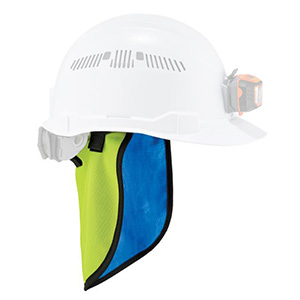
Discover all our head and neck protection against heat stress
5.4 SHOES, SOCKS & GLOVES
Foot and hand protection is often overlooked in heat, but has a major impact on overall comfort and safety.
| PPE | Why suitable in heat | Benefits |
|---|---|---|
| Microfibre safety shoes | Breathable and lightweight | Fast moisture removal, less odour, more comfort |
| Technical work socks | Moisture regulation | Less friction, fewer blisters, more hygienic |
| Microfibre gloves | Ultra-light and breathable | Good grip through sweat removal, comfortable for precision work |
5.5 SKIN PROTECTION WITH UV FILTER
Skin protection is often underestimated in heat stress prevention, while it plays a direct role. The skin is our largest organ and an active component of thermoregulation: through sweating and heat dissipation, it helps the body cool down. When the skin is damaged or insufficiently protected against heat and UV radiation, these mechanisms function less efficiently, resulting in a faster rise in body temperature. Good skin protection, such as sunscreen, supports natural heat dissipation, prevents UV damage, increases comfort and reduces irritation.
5.6 OTHER SUPPORT AIDS
Accessories form the final layer of an effective heat stress management policy. They help employees stay hydrated, cool and comfortable while also supporting the longevity and hygiene of the PPE itself.
Isothermal water bottles keep your drinks cool for longer. Sufficient, chilled water ensures better temperature regulation and maintains your fluid balance.
A cooling towel provides a cooling effect through evaporation.
Novven 3 drying & anti‑pollution cabinet for PPE ensures better hygiene and longer service life.
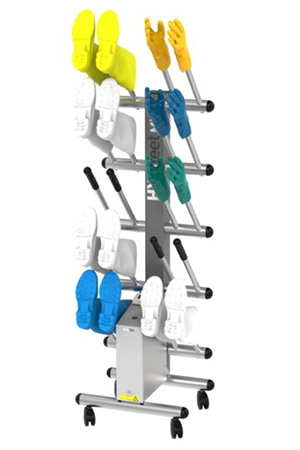
Hygifeet and Hygigrip drying racks ensure the drying, internal cleaning and deodorising of your shoes and gloves.
Discover all our accessories against heat stress
Heat stress requires a tailored approach. The right combination of measures and PPE depends on your sector, working environment and risk profile. Our Safety Experts will be happy to help you select the right package.