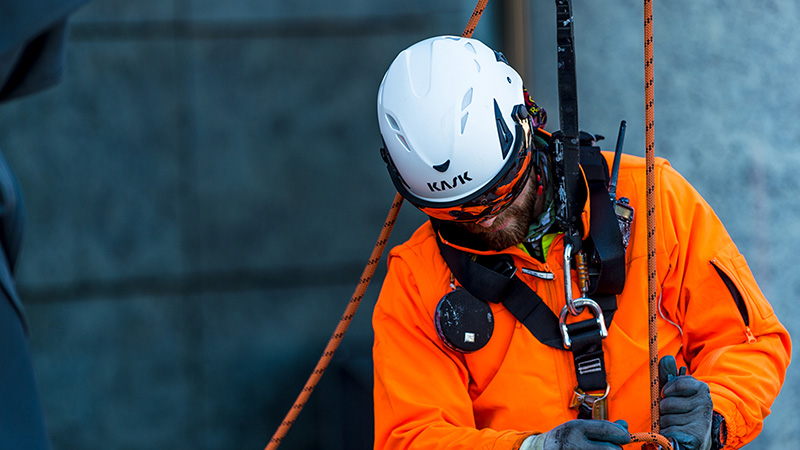
The European standard for industrial protective helmets has undergone an important update. With the introduction of EN 397:2025, head protection is being aligned with today's reality, in which working environments are becoming more complex, risks are increasing, and comfort and usability are playing a greater role.
Higher levels of protection, two new helmet types, stricter accessory testing and a clear transition period. In this blog, we explain what these changes specifically mean for your organisation.
Why was EN ISO 397 revised?
In April 2025, the European Standardisation Organisation published the new EN 397:2025, replacing the long-standing EN 397:2012 standard. The previous standard focused primarily on protection against falling objects. Today, the risk profile is different. Employees are more frequently working at height, the risk of falls and impacts has increased, and accessories such as visors and hearing protection are being used more often. The new standard addresses these developments and provides broader head protection that better reflects the realities of the workplace.
Two new helmet types
One of the most important changes is the introduction of two types of protective helmets.
Type 1 helmets provide protection against impacts from above (49 J) and are comparable to the traditional helmets used in industry. The chin strap remains optional, but if used, it must have a retention strength of more than 150 N (15 kg).
Type 2 helmets provide significantly greater protection by absorbing impacts to the top (98 J, high energy) and the sides, front and rear of the head (24.5 J). For this type of helmet, a chin strap is mandatory, with a retention strength of more than 500 N (50 kg), providing better retention in the event of a fall. This means helmets provide better protection against the most common causes of head injuries in modern working environments.
Additional new requirements
In addition to higher impact protection, EN 397:2025 introduces a number of new basic requirements that were not previously mandatory. Helmets must now be resistant to ignition (resistance to ignition), a penetration test must be performed on the ventilation openings in the shell, and an ergonomic test assesses wearing comfort and fit. Sizing – how correctly the helmet fits different head sizes — is also now explicitly tested. These four requirements apply to both Type 1 and Type 2 helmets.
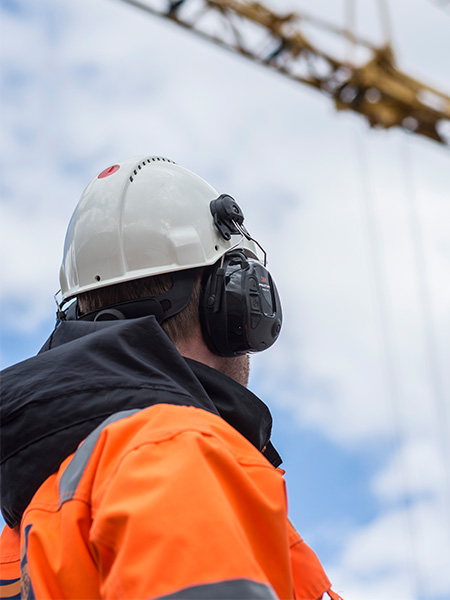
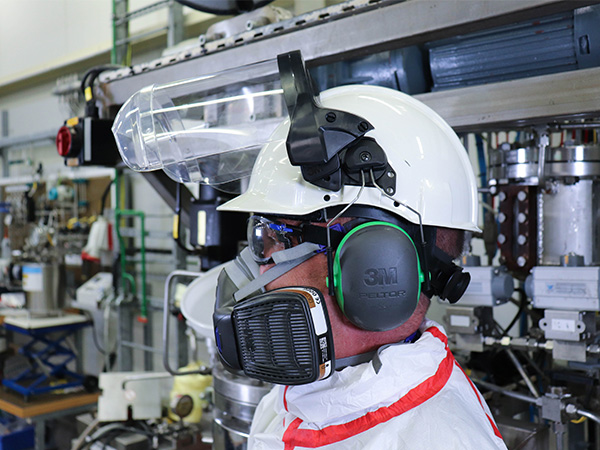
In practice, protective helmets are often combined with accessories such as visors, ear defenders and lamps. Under the new standard, these accessories must also be tested during the certification process. This means compatibility becomes crucial, and only combinations that have been tested together can be considered compliant. In addition, the manufacturer must now have the helmet's Helmet Positioning Index (HPI) registered by the testing laboratory. This is a measure that establishes the positioning of the helmet on the head.
More extensive application requirements
The new standard contains a more comprehensive framework of application requirements. Greater attention is paid to specific working conditions such as extreme temperatures, electrical risks, protection against molten metal and enhanced visibility. This makes it possible to select a helmet more specifically suited to the risks of the working environment.
- Low temperatures: -20°C / -30°C / -40°C
- High temperatures: +150°C
- Electrical insulation: Reference EN 50365
- Molten metal splash (MM)
- NEW: Electrostatic properties
- NEW: Enhanced visibility: Day & night: the entire exterior of the helmet must be made of fluorescent material
- NEW: OCP – lateral penetration: Off-crown penetration resistance as an additional option
Below is a summary of the detailed application requirements of the new EN 397:2025 standard.
|
Type 1 Standard protection |
Type 2 – Enhanced protection High energy + lateral impact |
|---|---|
|
49 J
|
98 J
|
Transition period and impact: when do you need to comply?
The introduction of the new standard takes place through a transition period, running from November 2025 to December 2027. Existing helmets complying with the previous standard remain valid for the time being, giving organisations time to review their equipment and risk assessments.
The transition period is primarily intended to give manufacturers time to adapt their production and carry out the necessary recertification. In practice, most manufacturers are likely to wait until close to the end of the transition period before actually producing under EN 397:2025, as there is still a possibility that the standard may be amended. There is therefore no reason for organisations to specifically look for EN 397:2025-certified helmets just yet.
It is also worth noting that EN 12492, the standard for mountaineering helmets, will continue to exist as a separate standard. For climbing helmets used in an industrial setting, however, a helmet complying with EN 397:2025 Type 2 may be a suitable alternative.
WHAT ABOUT THE PRODUCTION OF PROTECTIVE HELMETS?
Until 16 December 2027, helmets may be manufactured under both the old EN 397 + A1 2012/EN 12492:2012 and under EN 397:2025/EN 12492:2025. After the transition period, protective helmets may only be manufactured under EN 397:2025 / EN 12492:2025.
- The transition period ends on 16 December 2027, when EN 397 + A1 2012 and EN 12492:2012 are withdrawn
- There is no fixed end date after which helmets manufactured under EN 397 + A1 2012 or EN 12492:2012 may no longer be used
- Helmets manufactured in accordance with EN 397 + A1:2012 / EN 12492:2012 may continue to be sold and used after the end of the transition period on 16 December 2027, provided that:
- The CE certificate is still valid
- The helmet’s expiry date has not expired
- The helmet is not damaged
- Helmets manufactured under EN 397 + A1:2025 / EN 12492:2025 may continue to be sold after 16 December 2027, provided that the CE certificate is still valid and the helmet's expiry date has not been exceeded.
What does this mean for your organisation?
The new standard requires a more considered approach when selecting head protection. It is important to reassess risks, distinguish between Type 1 and Type 2 helmets, and pay attention to accessory compatibility. By taking these factors into account today, you can ensure that your employees are optimally protected and that your organisation is prepared for future requirements.
Follow our checklist below:
- Make an inventory of all protective helmets currently in use and record their current certification (EN 397:2012, EN 12492, etc.)
- Analyse the risk profiles for each role and location: do you need Type 1 or Type 2?
- Assess which special application requirements apply (temperature extremes, electrical risks, visibility, etc.)
- Check the accessory compatibility of the helmets you are considering
- Plan replacements based on the natural service life of your helmets, not necessarily before the end of the transition period
- Manufacturers must specify the HPI (Helmet Positioning Index) for certification and positioning during testing.
Discover all our protective helmets
Do you want to be sure that your company complies with EN 397:2025?
Our experts can help you with a free compliance check of your current helmet fleet and advise you on the best solutions for your specific sector and risk profile.
Request your free consultation
Why are we only communicating this now?
Although the new EN 397:2025 standard was published in April 2025, we deliberately chose to wait to communicate about it now. At the time of publication, the standard had not yet been harmonised and there were still uncertainties regarding its practical impact, the availability of certified products and the exact transition period. In the meantime, the first products have become available, allowing us to provide more specific advice based on real-world applications. By communicating now, we can not only inform organisations but also immediately support them with practical, well-founded advice.
Frequently asked questions about EN 397:2025
ARE MY CURRENT HELMETS (EN 397:2012) STILL VALID AFTER 16 DECEMBER 2027?
From 16 December 2027, manufacturers may no longer place new helmets on the market that are certified solely under EN 397:2012. However, helmets that were already manufactured and certified under EN 397:2012 prior to that date may still be sold and purchased as long as their CE certificate remains valid. Helmets that are already in use are subject to assessment by your health and safety officer based on their remaining service life and the level of risk. They may continue to be used provided that the CE certificate is valid, the expiry date has not expired and the helmet is not damaged.
DO I NEED TO REPLACE ALL MY HELMETS IMMEDIATELY?
Not immediately. The transition period runs until 16 December 2027. However, you should plan your replacements in good time. Helmets have a limited service life (generally 3 to 5 years). There is no need to actively look for EN 397:2025-certified helmets now: manufacturers will probably only switch to the new standard towards the end of the transition period. Replace your helmets as usual, based on their service life and condition.
IS TYPE 2 ALWAYS BETTER THAN TYPE 1?
Not necessarily "better", but more suitable for a wider range of risk situations. Type 2 is mandatory where there is a risk of lateral impacts (working at height, tree felling, working in confined spaces). For conventional construction sites or warehouse environments, Type 1 may be entirely sufficient. A thorough risk assessment is the basis for making the right choice.
WHAT IF I ADD A VISOR OR EAR DEFENDERS TO A CERTIFIED HELMET?
Check whether those accessories are included in the helmet's test certification. Only accessories that have been tested in conjunction with the helmet are compliant. Use only accessories that have been explicitly approved by the manufacturer and are listed in the user manual.